
Portafilter machine for beginners: comparison & guide 2026
Share
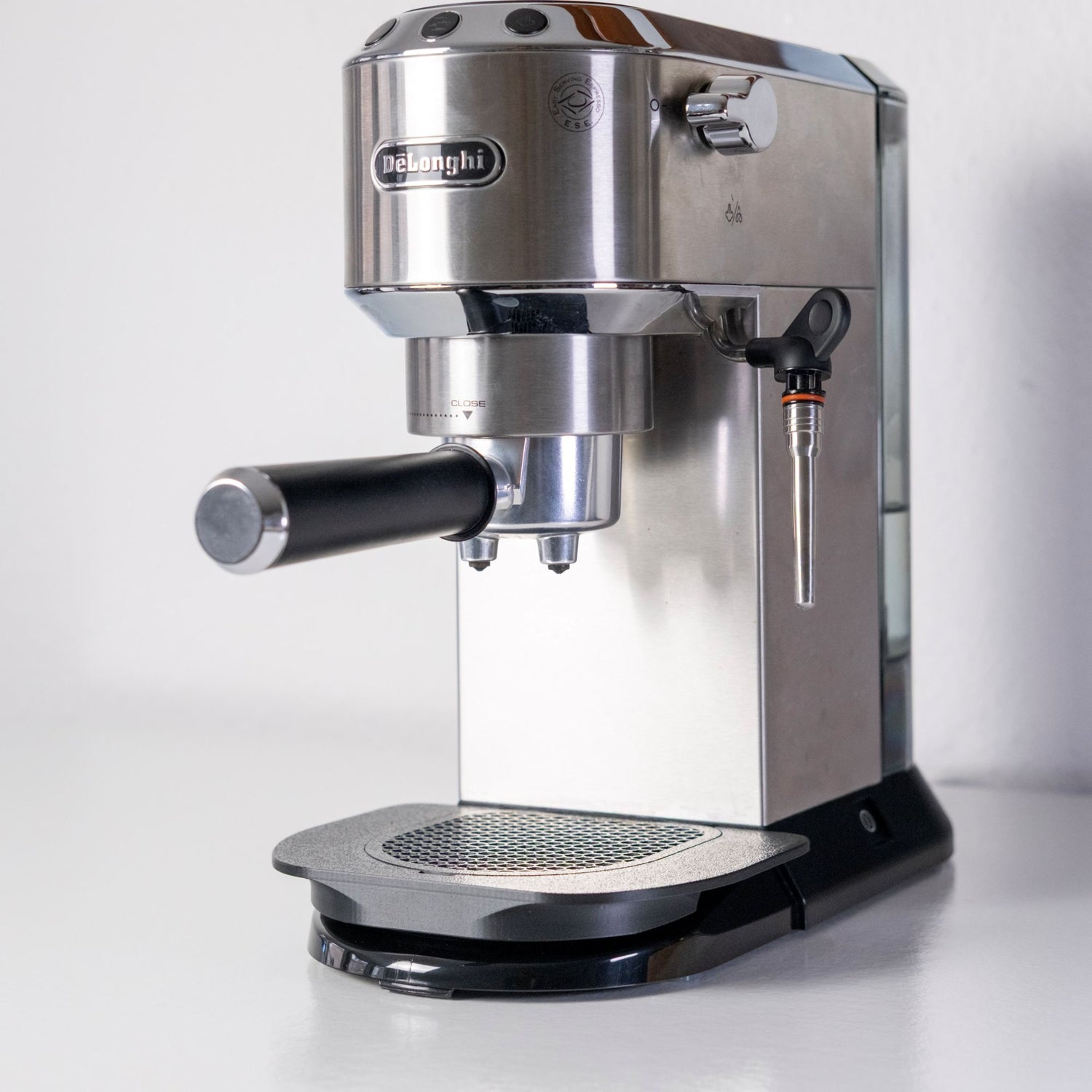
I started out with a De'Longhi Dedica and, in the first few weeks, poured away a fair amount of thin, sour espresso. Not because the machine was bad, but because nobody told me what really matters when you begin. That's exactly what I'm making up for here.
This guide helps you find the right portafilter machine to start with – no marketing waffle, and without drowning you in technology you don't need at the beginning. I run a beginner machine myself and write from practice, not from the spec sheet.
Who is a portafilter machine worth it for?
A portafilter machine is the right choice if you want to tweak the result yourself: grind size, dose, extraction time. In return you get espresso at a level that a bean-to-cup machine can't reach at the push of a button – but you have to practise a little.
If in the morning you just want a quick cup of coffee without bothering with anything, a bean-to-cup or filter machine is more honest with you. The portafilter rewards people who enjoy the process, at least a bit.
And yes: with a portafilter machine you can also make "normal" long coffee (Americano = espresso + hot water) and, with the steam wand, cappuccino and flat white. Espresso is only the base.
The five things beginners should look out for
Forget the glossy features. These five points decide your daily routine:
- Basket diameter (51, 54 or 58 mm). This matters more than it sounds, because all your accessories depend on it. Compact beginner machines like the De'Longhi Dedica use 51 mm, many mid-range machines 54 mm, "proper" barista machines 58 mm. Bigger isn't automatically better – but you should know which size you're buying, because tamper, baskets and dosing funnels have to match.
- Thermoblock or boiler. Almost all beginner machines have a thermoblock: heats up quickly, energy-efficient, completely sufficient for espresso. A boiler system is more stable when pulling several shots in quick succession, but costs considerably more. For the start, thermoblock is the right, affordable choice.
- Single- or double-walled basket. Many beginner machines come with double-walled (pressurised) baskets that produce a pretty crema even with mediocre coffee. As soon as you get better, you'll want to switch to single-walled baskets – these honestly show what you're doing. Make sure the machine allows both.
- Pressure and puck behaviour. The marketing figure "15 or 19 bar" is irrelevant – at the puck you need about 9 bar. More important: some beginner machines (including the Dedica) have no pressure relief valve (OPV). That means too fine a grind builds up too much pressure and you get channelling. Not a deal-breaker, but good to know because it helps when dialling in.
- The grinder is almost more important than the machine. The most common beginner mistake is putting the whole budget into the machine and working with pre-ground coffee or too coarse a grinder. Without a grinder that adjusts finely and evenly, no portafilter will be happy. Plan for it from the start – if necessary, rather the cheaper machine and a decent grinder.
Which class suits you?
Instead of selling you "the one best machine" (which doesn't exist), here are the three classes beginners move within – with an honest assessment.
- Compact & affordable (around €150–250). Slim thermoblock machines like the De'Longhi Dedica (EC685/EC885). Tiny footprint, quick to heat, 51 mm. The best entry if you have little space and first want to see whether the hobby is for you. The stock equipment is sparse – but with a few targeted upgrades you get surprisingly good espresso out of it. That's exactly our speciality.
- Mid-range with more comfort (around €350–500). Machines with 54 mm and more stable temperature, e.g. the Sage the Bambino Plus (view on Amazon)* – very quick to heat, with an automatic milk-frothing function. Catch: no built-in grinder, you need that as well. If you want the grinder integrated, look at the Sage Barista Express (with conical burr, but pricier). Sensible if you already know you'll stick with it.
- Beginner classics with room to grow (~€450–800). 58 mm single-boiler machines with a professional portafilter, mechanically simple and virtually indestructible – they deliver noticeably better espresso than the comfort machines, but are manual (no auto milk froth). The classic Amazon candidate is the Gaggia Classic Evo Pro (view on Amazon)* with a huge upgrade scene. A touch better, but pricier and not on Amazon: the Rancilio Silvia. Not a "simple" machine, but a purchase for the decade.
Prices are a rough guide and vary depending on the offer – check current prices before buying.
Comparison at a glance
| Criterion | Compact (De'Longhi Dedica) | Mid-range (Sage Bambino Plus) | Classic (Gaggia Classic Evo Pro) |
|---|---|---|---|
| Price range | ~€150–250 | ~€350–500 | ~€450–800 |
| Basket | 51 mm | 54 mm | 58 mm |
| Footprint | very small | medium | large |
| Heat-up time | very short | short | medium |
| Expansion/upgrades | lots of potential | medium | a great deal |
| Ideal for | space-savers & testing | comfortable entry | "do it right once" |
My honest recommendation for starting out
If you're not sure the hobby will grab you, start small. A compact machine like the De'Longhi Dedica plus a decent grinder gets you surprisingly far for little money – and you quickly notice whether you fancy more. You can always upgrade later.
The thinking mistake I made at the start: blaming the machine for the result. In fact, grinder, technique and a few cheap upgrades decide over 90% of the taste. That's why it's worth starting underneath, not on top.
What you really need – and what you don't
You don't need the complete barista shelf. At the beginning, a few things that make a real difference are enough:
- A scale. By far the most important tool. Without weighing, you're just guessing.
- A proper tamper instead of the supplied plastic spoon – for a level coffee bed. A 51 mm tamper e.g. from here* fits the Dedica.
- A dosing aid, so the coffee gets into the basket cleanly and evenly. For 51 mm machines, e.g. the dosing funnel for the 51 mm portafilter.
Especially for the De'Longhi Dedica we've bundled the sensible upgrades – from the single-walled basket to the flat drip tray – in the Dedica Upgrade Kit and in the overview of Dedica accessories.
What you don't need at the beginning: expensive distributors, WDT tools with a stand, puck screens in three versions. That comes later, when you know where your setup is stalling.
The most common beginner mistakes
Almost all beginners stumble over the same things:
- Ground too coarse, too little coffee in the basket. Result: thin and sour.
- Tamped crooked or unevenly. Result: channelling, the water finds itself a channel.
- Changing everything at once. Always adjust only one variable at a time.
How to fix this specifically for the Dedica is laid out step by step in the tuning guide for the DeLonghi Dedica and in detail under Dialling in espresso with the Dedica. If your shot runs unevenly, a bottomless portafilter makes the faults visible immediately.
Conclusion
There's no "best" beginner portafilter machine – there's the right one for your space, your budget and your appetite for the process. For most people the smartest path is: start small, invest in a good grinder, sharpen up with a few targeted upgrades. Then the espresso tastes good and you have room to grow, instead of having burned your budget on day one.
FAQ
Which portafilter machine is best for beginners? The best beginner machine is the one that suits your space, budget and use. For a compact, affordable start, a thermoblock machine with 51 mm like the De'Longhi Dedica is a good choice; more important than the model is a finely adjustable grinder.
What does a good beginner portafilter machine cost? Compact beginner machines are roughly €150–250, more comfortable mid-range machines €300–450. Also budget for a decent grinder – without it, any portafilter stays below its potential.
Do I also need a grinder? Yes. A finely and evenly adjustable grinder is, for good espresso, almost more important than the machine itself. Pre-ground coffee is too coarse and loses aroma quickly.
Can you also make normal coffee with a portafilter machine? Yes. As an Americano (espresso plus hot water) you get a long coffee, and with the steam wand additionally cappuccino and flat white. Espresso is the base, not the limit.
What's the difference between 51, 54 and 58 mm? That's the diameter of the basket. All your accessories depend on it (tamper, baskets, funnels). Compact beginner machines mostly use 51 mm, mid-range 54 mm, barista machines 58 mm.
* Affiliate link (Amazon): if you buy through it, we may receive a small commission – at no extra cost to you.


